Good media content has the power to enrich our lives. Its effectiveness is becoming more and more important in a wide variety of fields, such as industry, education, culture, and entertainment. Expectations of its use in the general public are also increasing. Although the word content might be used to refer to a single image or music we use the broader definition of content.
Content is provided to people through adequate output devices such as displays, such that people derive profound pleasure by interacting with it through an appropriate input device. Through these interactions with content on a computational device people can enhance their hedonistic feeling of satisfaction, happiness and excitement. Moreover, content is not always enjoyed alone but often in the company of others (e.g., friends, family, and so on) simultaneously. In these cases, it is necessary to consider the “environment” in which groups of people enjoy the content and “atmosphere” which is generated by the “environment.” Good interactive content has the potential to calm the “atmosphere” and in the process will often make the people in the environment more happy and friendly.
Thus, we focus on non-traditional content areas other than movies, music, and games, conducting comprehensive research on a variety of interactive content which creates new value through interactions with humans, by considering the atmosphere including the content and human. In this context, the focus of our group is in researching new and innovative techniques to interact with novel forms of content with the goal of enhancing the impact, effectiveness and hedonistic feelings of the content to improve and enrich people’s lives. We focus on non-traditional contents along side more traditional content like movies, music and games.
Topics
- October 21, 2026
Dr. Andrew Cunningham, who is currently visiting our laboratory as a Visiting Associate Professor from the Adelaide University in Australia, gave a lecture.
Dr. Cunningham of the Adelaide University is also a member of the Australian Research Centre for Interactive and Virtual Environments, one of the world’s largest VR research centers. Given our close collaboration with him and his group through the JST ASPIRE Mental Well-being Research project and the RIEC’s Cooperative Research Projects, we plan to continue and further develop our collaborative research in the future.
- October 9, 2026
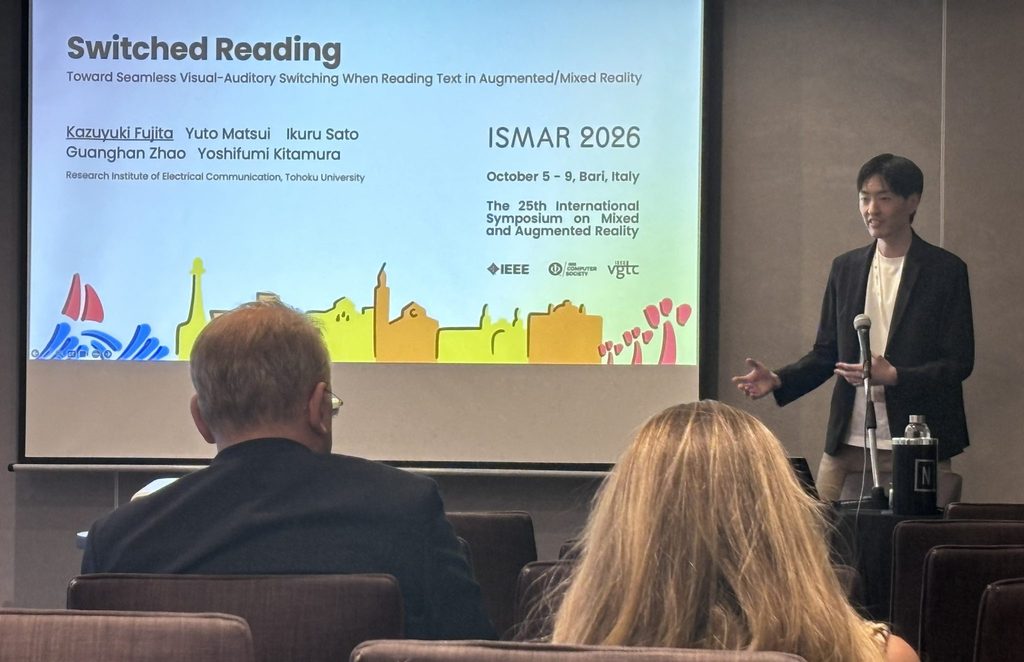
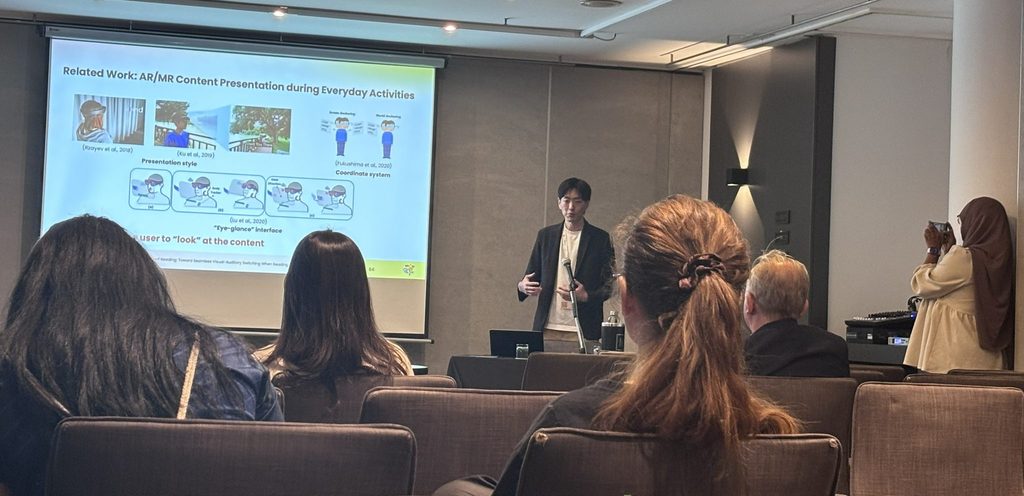
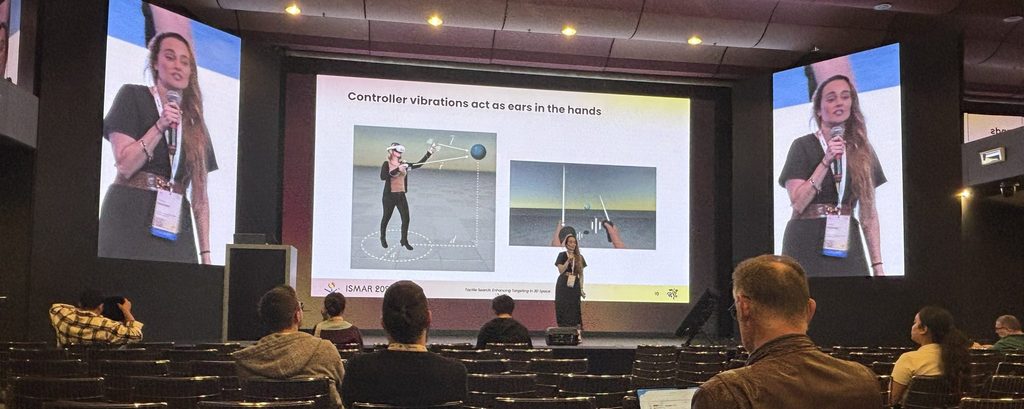
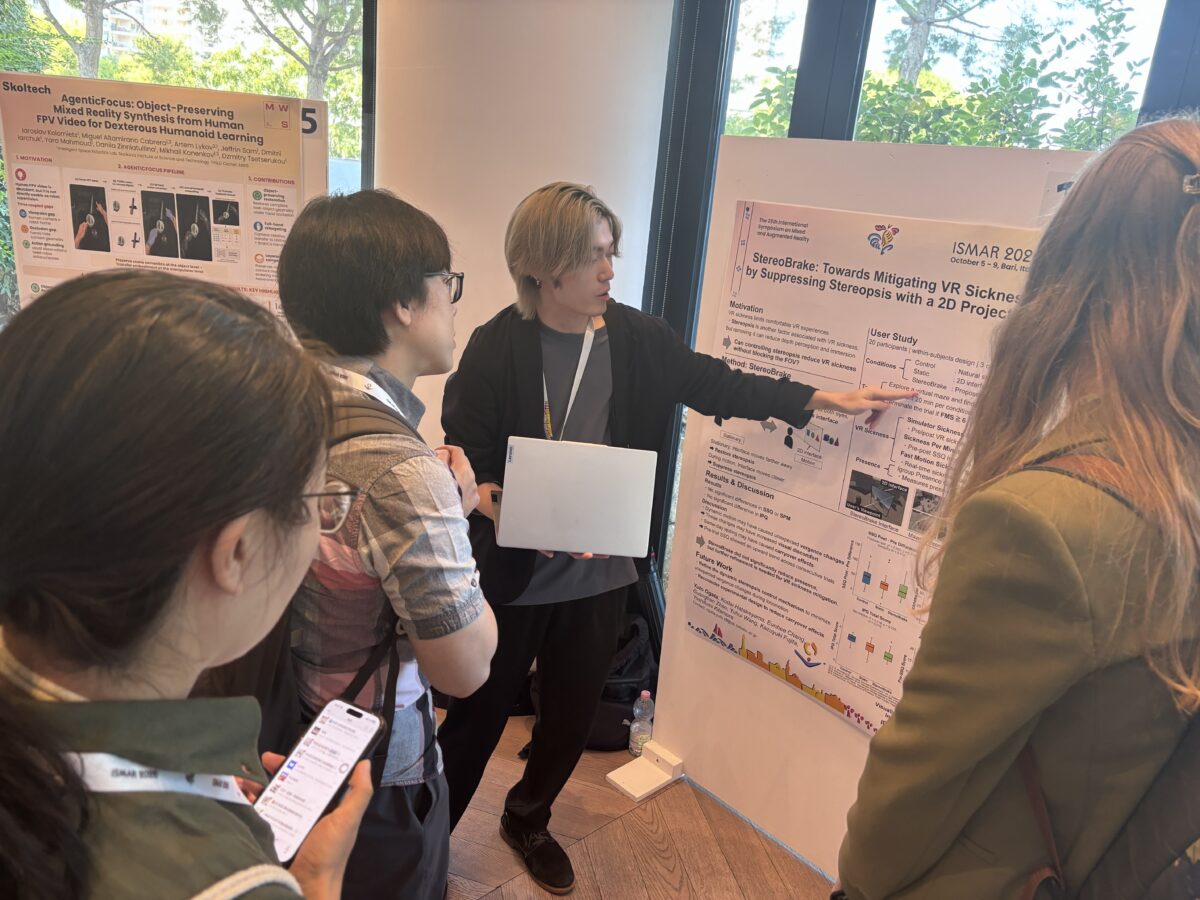
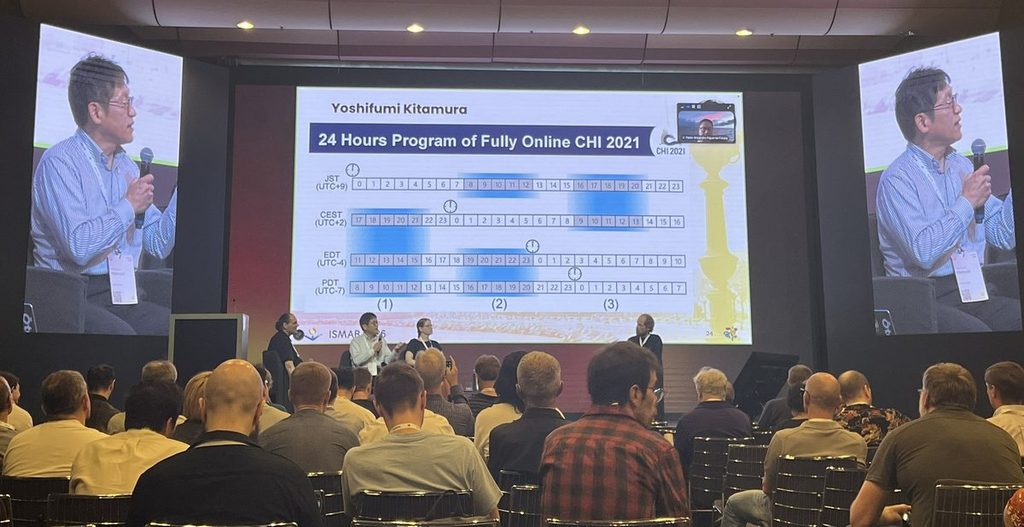
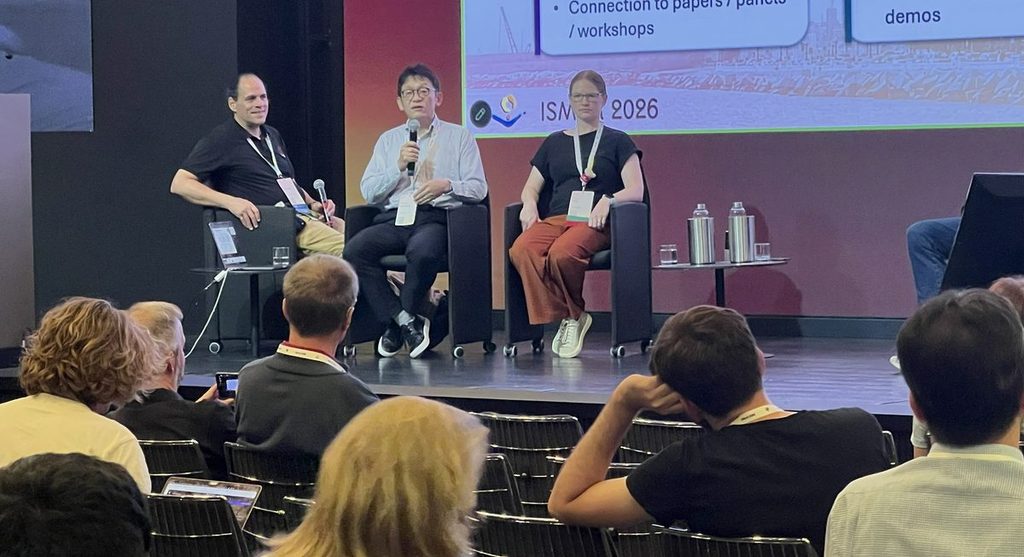
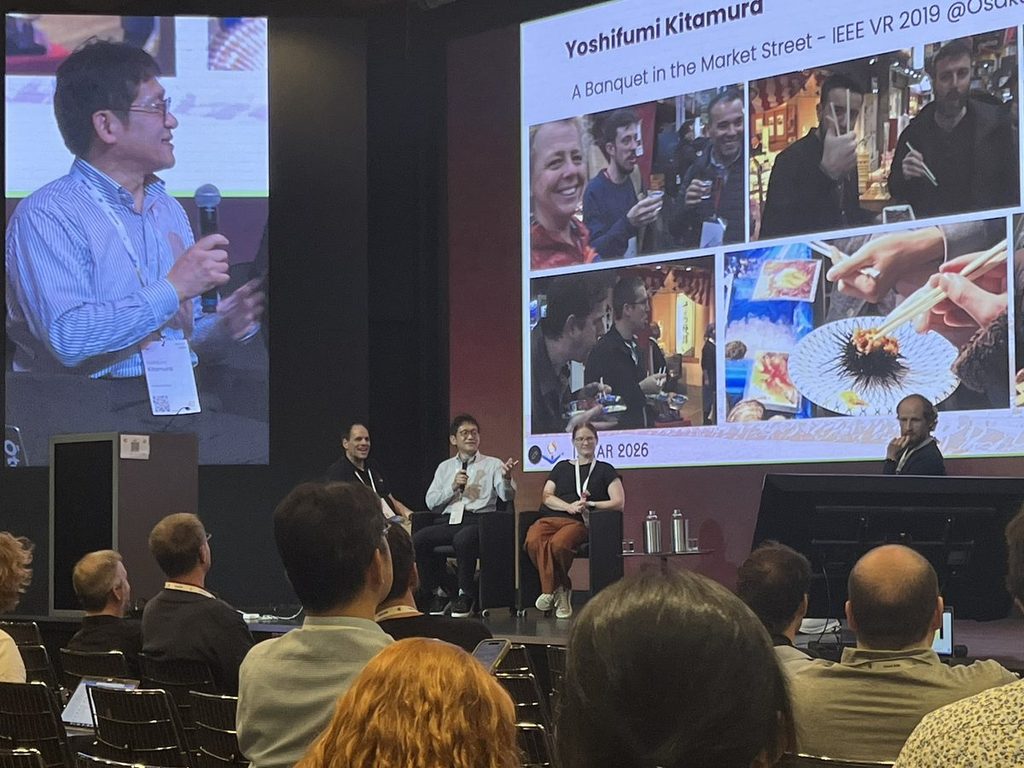
At the 25th IEEE International Symposium on Mixed and Augmented Reality (ISMAR), held in Bari, Italy, from October 5–9, Associate Professor Kazuyuki Fujita and our research collaborator Amber Maimon (University of Canterbury, HIT Lab NZ) each gave oral presentations on two accepted papers. Additionally, student Yuto Ogata presented a poster. In addition, Professor Yoshifumi Kitamura participated as a panelist in a panel discussion.
Oral Presentations of Papers
- Kazuyuki Fujita, Yuto Matsui, Ikuru Sato, Guanghan Zhao, Yoshifumi Kitamura: Switched Reading: Toward Seamless Visual-Auditory Switching When Reading Text in Augmented/Mixed Reality, Proc. of IEEE International Symposium on
Mixed and Augmented Reality (ISMAR)
https://doi.org/10.48550/arXiv.2608.06985 - Amber Maimon, Iddo Wald, Jonas Keppel, Eunhee Chang, Yoshifumi Kitamura, Stefan Schneegass, Rainer Malaka, Donald Degraen: Tactile Search: Enhancing Targeting in 3D Space, Proc. of IEEE International Symposium on
Mixed and Augmented Reality (ISMAR)
https://doi.org/10.48550/arXiv.2609.05867
Poster Presentation
- Yuto Ogata, Kodai Hatakeyama, Eunhee Chang, Guanghan Zhao, Yuhui Wang, Kazuyuki Fujita, Yoshifumi Kitamura: StereoBrake: Towards Mitigating VR Sickness by Suppressing Stereopsis with a 2D Projection
Panel Discussion
- Rethinking Academic Conferences: Meaningful Connections at a Distance
Moderator: Rob Lindemann (University of Canterbury, New Zealand)
Panelists: Pablo Figueroa (Universidad de los Andes, Colombia), Jens Grubert (Coburg University, Germany), Yoshifumi Kitamura (Tohoku University, Japan), Tabitha Peck (Davidson College, USA)
https://www.ieeeismar.net/2026/panels/
- Kazuyuki Fujita, Yuto Matsui, Ikuru Sato, Guanghan Zhao, Yoshifumi Kitamura: Switched Reading: Toward Seamless Visual-Auditory Switching When Reading Text in Augmented/Mixed Reality, Proc. of IEEE International Symposium on
- September 28, 2026
Prof. Yang Jianfei, the NTU PI for the project “Safeguarding Elderly Users in Embodied Task Planning with LLM,” which was selected by the “Tohoku University–NTU Joint Research Fund” established to promote and encourage joint research between Nanyang Technological University (NTU) in Singapore and Tohoku University, visited us and gave a lecture titled “Beyond Language: Teaching Robots to Understand How Humans Communicate.”
- September 18, 2026
Prof. Benjamin Watson from NC State University in the U.S. visited us and gave a talk titled “Latency: Its Effects on Interaction and gameplay, and How to Reduce It”.
- September 7, 2026
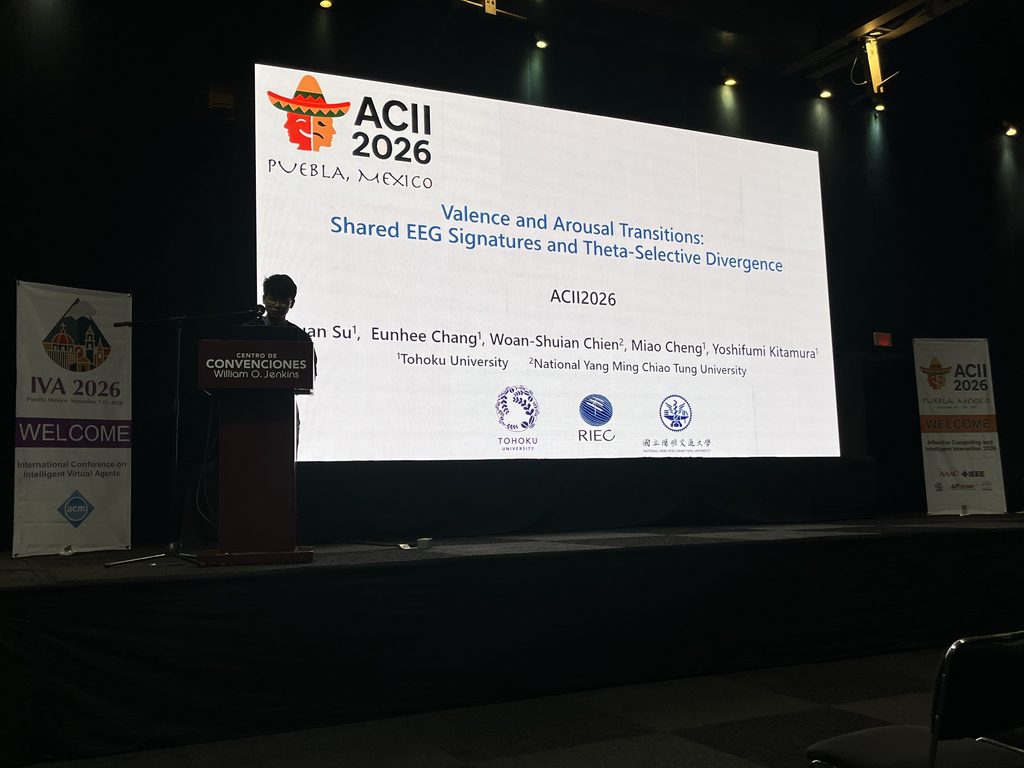
We attended the 14th International Conference on Affective Computing and Intelligent Interaction (ACII 2026), which was held in Mexico on September 7th – 10th, 2026.
We hosted the Multilingual and Multimodal Affective Computing Workshop & Challenge (MMAC 2026).
Participants were invited to use our DIEM-A dataset (Diverse Intercultural E-Motion Database of Asian Performers) for emotion recognition from human motion. Two papers were selected for Best Performance and Best Explainability. More information is available on the MMAC 2026 website• We presented a paper on EEG features of valence and arousal transitions:
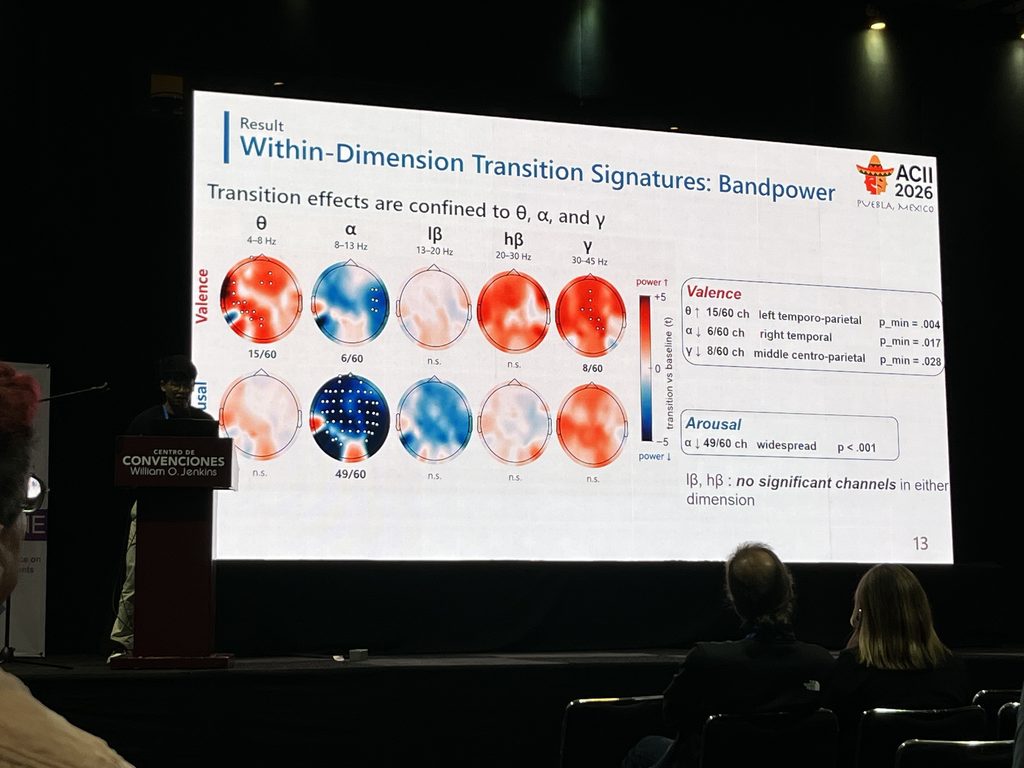
Huan Su, Eunhee Chang, Woan-Shiuan Chien, Miao Cheng, and Yoshifumi Kitamura. “Valence and Arousal Transitions: Shared EEG Signatures and Theta-Selective Divergence.” In 14th International Conference on Affective Computing and Intelligent Interaction (ACII ’26)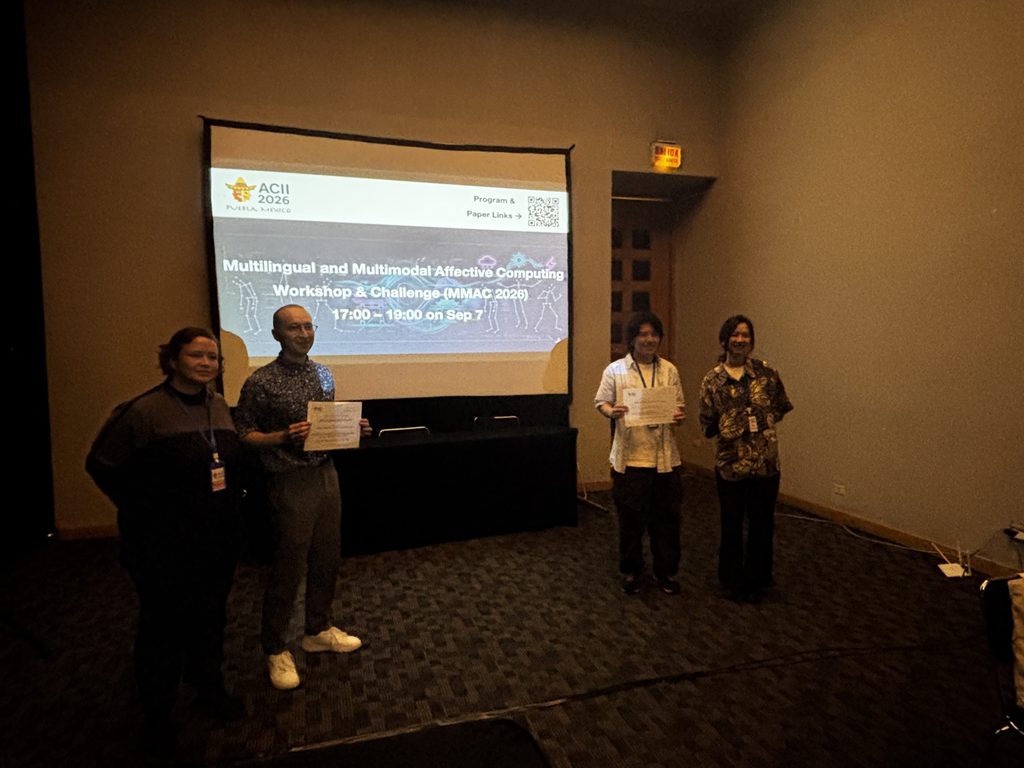
- September 25, 2026
We will host the ACM Symposium on Virtual Reality Software and Technology (VRST) 2026 from November 16 to 18 at the Global Connect Hub – Atelier Q∞, Research Institute of Electrical Communication, Tohoku University, where our laboratory is located.